Sapiens — Yuval Noah Harari
Summary in 15 minutes. What changed inside the head of an ordinary animal 70,000 years ago, and why it ended up the last human standing. Twelve thousand years ago humans swapped hunting for farming. The species won; the individual paid. How thousands of separate cultures merged into one world, through money, empires and religion. In just 500 years, human power grew more than in the previous 70,000. The history lesson is over. Now look at your own life in the big picture: a 7-day practice, a cheat sheet and some final words.
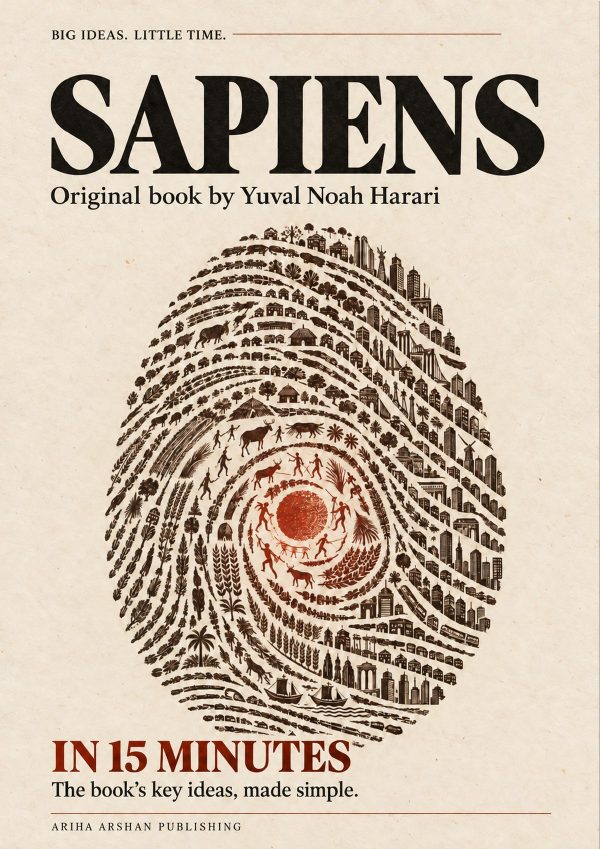
Key ideas of "Sapiens: A Brief History of Humankind"
The Cognitive Revolution
What changed inside the head of an ordinary animal 70,000 years ago, and why it ended up the last human standing.
- An Animal of No Significance: Once, there were at least six kinds of humans
- The Power of Stories: Our real superpower: talking about things that don’t exist
- The Serial Killer of Ecology: Wherever humans went, the big animals disappeared
The Agricultural Revolution
Twelve thousand years ago humans swapped hunting for farming. The species won; the individual paid.
- History’s Biggest Fraud: We didn’t domesticate wheat. Wheat domesticated us.
- The Luxury Trap and Imagined Orders: Today’s convenience becomes tomorrow’s obligation
The Unification of Humankind
How thousands of separate cultures merged into one world, through money, empires and religion.
- Money: The Greatest Story of Trust: The one story almost everyone on earth believes
- The Legacy of Empires: In time, the conquered adopt the conqueror’s culture as their own
- Religion and Human Values: Social order built on superhuman rules
The Scientific Revolution
In just 500 years, human power grew more than in the previous 70,000.
- The Discovery of Ignorance: "We don’t know": the admission that started the modern world
- Faith in the Future: Credit and capitalism: the story that tomorrow will be bigger than today
- Are We Any Happier?: History’s biggest question, and one historians rarely ask
Put It into Practice
The history lesson is over. Now look at your own life in the big picture: a 7-day practice, a cheat sheet and some final words.
- The 7-Day Thinking Practice: One question a day. Tick it off when you’re done.
- The One-Page Cheat Sheet: The whole book at a glance. Save it.
- Final Words: What Do We Want to Want?: The power of gods, and no sense of direction
From the free first chapter
Today "human" means just us. But around 100,000 years ago at least six human species walked the earth: Neanderthals in Europe, Homo erectus in East Asia, the tiny Homo floresiensis on the Indonesian island of Flores, and, in East Africa, us, Homo sapiens.
Back then we were an unremarkable animal somewhere in the middle of the food chain. Lions ate their fill and left; hyenas and jackals came next. Only then did we creep in to crack the bones for marrow.
Read the first chapter free · Price: ৳250 · or every book with a membership
Common questions
What is "Sapiens: A Brief History of Humankind" about?
What changed inside the head of an ordinary animal 70,000 years ago, and why it ended up the last human standing. Twelve thousand years ago humans swapped hunting for farming. The species won; the individual paid. How thousands of separate cultures merged into one world, through money, empires and religion. In just 500 years, human power grew more than in the previous 70,000. The history lesson is over. Now look at your own life in the big picture: a 7-day practice, a cheat sheet and some final words.
What are the key ideas of "Sapiens: A Brief History of Humankind"?
An Animal of No Significance; The Power of Stories; The Serial Killer of Ecology; History’s Biggest Fraud; The Luxury Trap and Imagined Orders; Money: The Greatest Story of Trust; The Legacy of Empires; Religion and Human Values; The Discovery of Ignorance; Faith in the Future; Are We Any Happier?; The 7-Day Thinking Practice.
Who wrote "Sapiens: A Brief History of Humankind"?
Yuval Noah Harari.
How long does the Gistbook summary take to read?
About 15 minutes. It is available in English and Bangla, and the first chapter is free.