Thinking, Fast and Slow — Daniel Kahneman
Summary in 15 minutes. Two “systems” share the work inside our heads. One is quick and emotional; the other is slow, careful and a little lazy. To save time, System 1 relies on mental shortcuts, called heuristics. Those shortcuts produce predictable errors. We trust what we know too much, and barely notice the part played by luck. Gains and losses, the wording of a choice, and the way we remember: each one quietly changes what we decide. You know the traps. Now practice waking System 2 for everyday decisions.
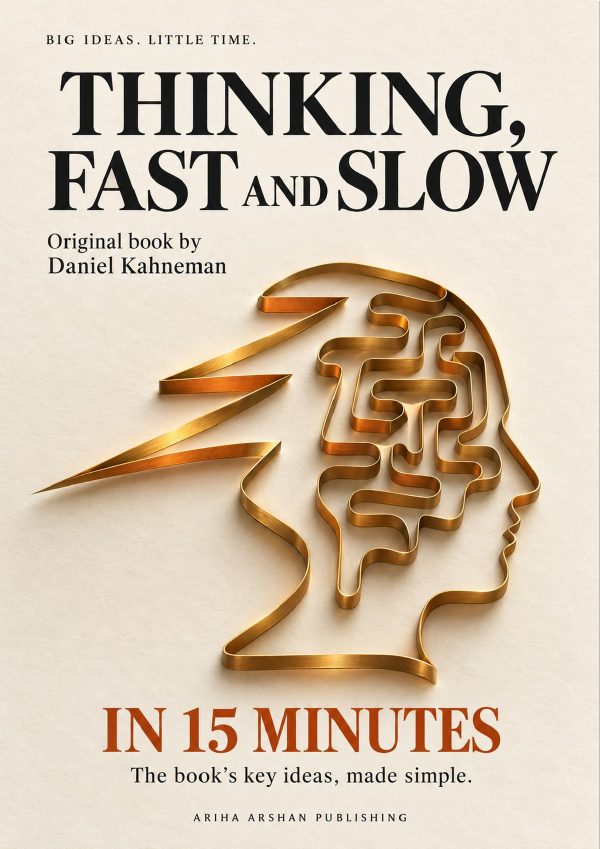
Key ideas of "Thinking, Fast and Slow"
The Two Characters of the Mind
Two “systems” share the work inside our heads. One is quick and emotional; the other is slow, careful and a little lazy.
- Fast Mind, Slow Mind: System 1 and System 2
- What You See Is All There Is: How System 1 builds a whole story from a few facts
Traps of the Mind
To save time, System 1 relies on mental shortcuts, called heuristics. Those shortcuts produce predictable errors.
- The Anchoring Trap: The first number ties us down
- What Springs to Mind: The availability trap
- The Linda Problem: A story that fits isn’t more likely
Overconfidence
We trust what we know too much, and barely notice the part played by luck.
- The Planning Fallacy: Why nearly every project runs late
- Regression to the Mean: The false lesson of praise and blame
- The Illusion of Skill: Skill or luck?
Decisions and Risk
Gains and losses, the wording of a choice, and the way we remember: each one quietly changes what we decide.
- Loss Aversion: Losses hurt about twice as much as gains please
- The Power of Framing: Same facts, different wording, different decision
- Experience vs Memory: The two selves inside us
Put It into Practice
You know the traps. Now practice waking System 2 for everyday decisions.
- The 7-Day “Think Slow” Plan: One small task a day. Tick it off when done.
- One-Page Cheat Sheet: The whole book at a glance. Save it.
- Final Word: Know Your Own Mind: You can’t avoid every error, but you can make fewer
From the free first chapter
For nearly three decades, Daniel Kahneman and his close friend Amos Tversky chased one question: why do intelligent people keep making the same kinds of mistakes? That work won Kahneman the 2002 Nobel Prize in Economics, although he was a psychologist who had never taken an economics course. He pictures the mind as two characters.
Read the first chapter free · Price: ৳250 · or every book with a membership
Common questions
What is "Thinking, Fast and Slow" about?
Two “systems” share the work inside our heads. One is quick and emotional; the other is slow, careful and a little lazy. To save time, System 1 relies on mental shortcuts, called heuristics. Those shortcuts produce predictable errors. We trust what we know too much, and barely notice the part played by luck. Gains and losses, the wording of a choice, and the way we remember: each one quietly changes what we decide. You know the traps. Now practice waking System 2 for everyday decisions.
What are the key ideas of "Thinking, Fast and Slow"?
Fast Mind, Slow Mind; What You See Is All There Is; The Anchoring Trap; What Springs to Mind; The Linda Problem; The Planning Fallacy; Regression to the Mean; The Illusion of Skill; Loss Aversion; The Power of Framing; Experience vs Memory; The 7-Day “Think Slow” Plan.
Who wrote "Thinking, Fast and Slow"?
Daniel Kahneman.
How long does the Gistbook summary take to read?
About 15 minutes. It is available in English and Bangla, and the first chapter is free.